Spider Anatomy Explained: Body, Legs, Eyes and Webs

Marcus Webb
Spider Researcher
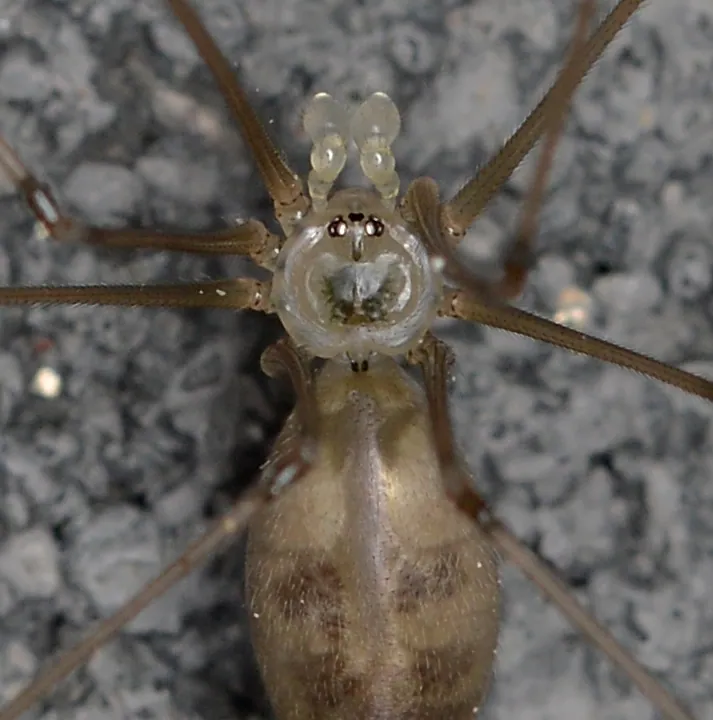
Cover photo: Ryan Hodnett · CC BY-SA 4.0 · Wikimedia Commons
Every spider shares the same blueprint: two main body parts, eight legs, multiple eyes and silk-producing organs. Learn that blueprint and identification stops being guesswork. Unlike insects, spiders have no wings and no antennae — a quick way to rule out look-alikes before you start.
Body structure
A spider's body has two sections joined by a narrow waist:
- The cephalothorax combines the head and thorax. It carries the eyes, fangs (chelicerae), pedipalps and all eight legs.
- The abdomen houses the internal organs and the silk glands.
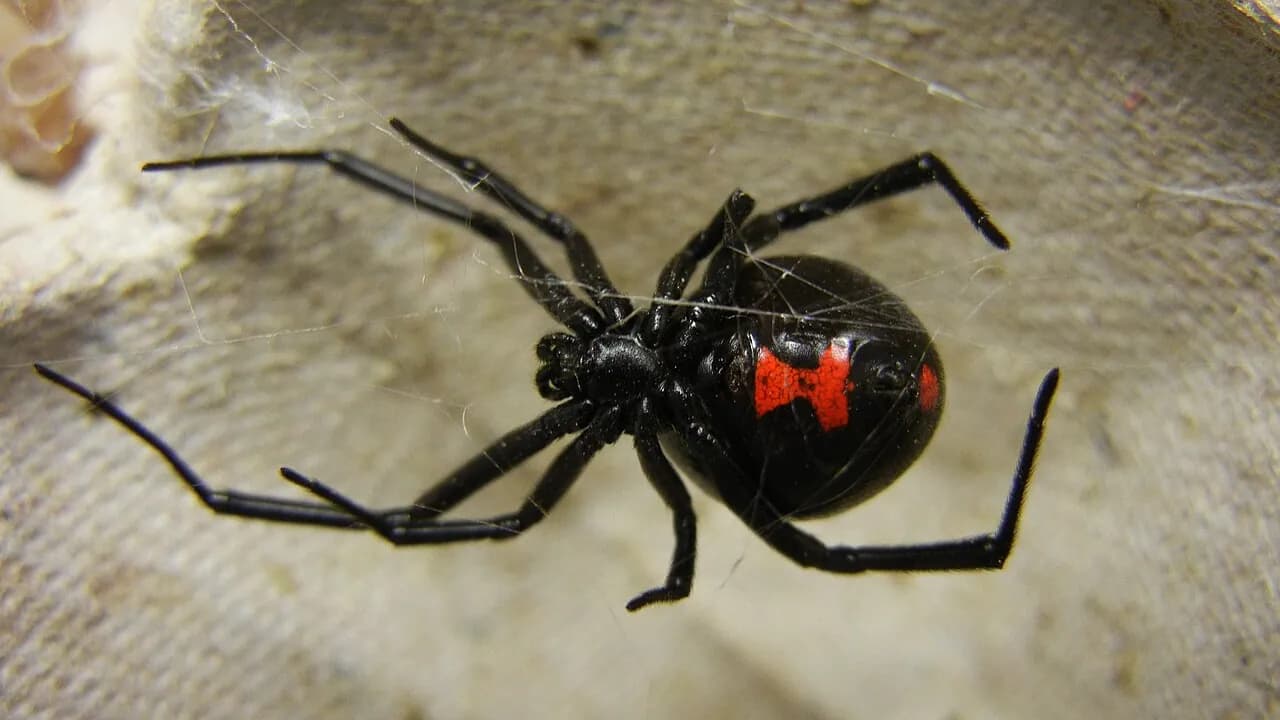
The relative size and shape of these two parts is one of the most useful identification signals — compare the bulbous abdomen of a widow with the long, slim body of a cellar spider.
Legs and how they move
Each of the eight legs is built from seven segments: coxa, trochanter, femur, patella, tibia, metatarsus and tarsus. Legs do far more than walk — they detect vibration, capture prey, aid climbing and even communicate through tapping.
Here is the surprising part: spiders have no muscles to extend their legs. Instead they pump body fluid into the limb under hydraulic pressure to push it straight. It is why a dead spider curls up — without pressure, the legs simply fold.
When you are identifying a spider, pay attention to leg length, thickness, hairiness and stance. A crab-like sideways splay (huntsman) looks nothing like the tight, upright posture of a widow.
Eyes and vision
Most spiders have eight eyes, but their abilities vary enormously. Jumping spiders have excellent vision — they detect colour and fine detail and will visibly turn to watch you. Web-builders, by contrast, rely mostly on sensing vibration and see little.
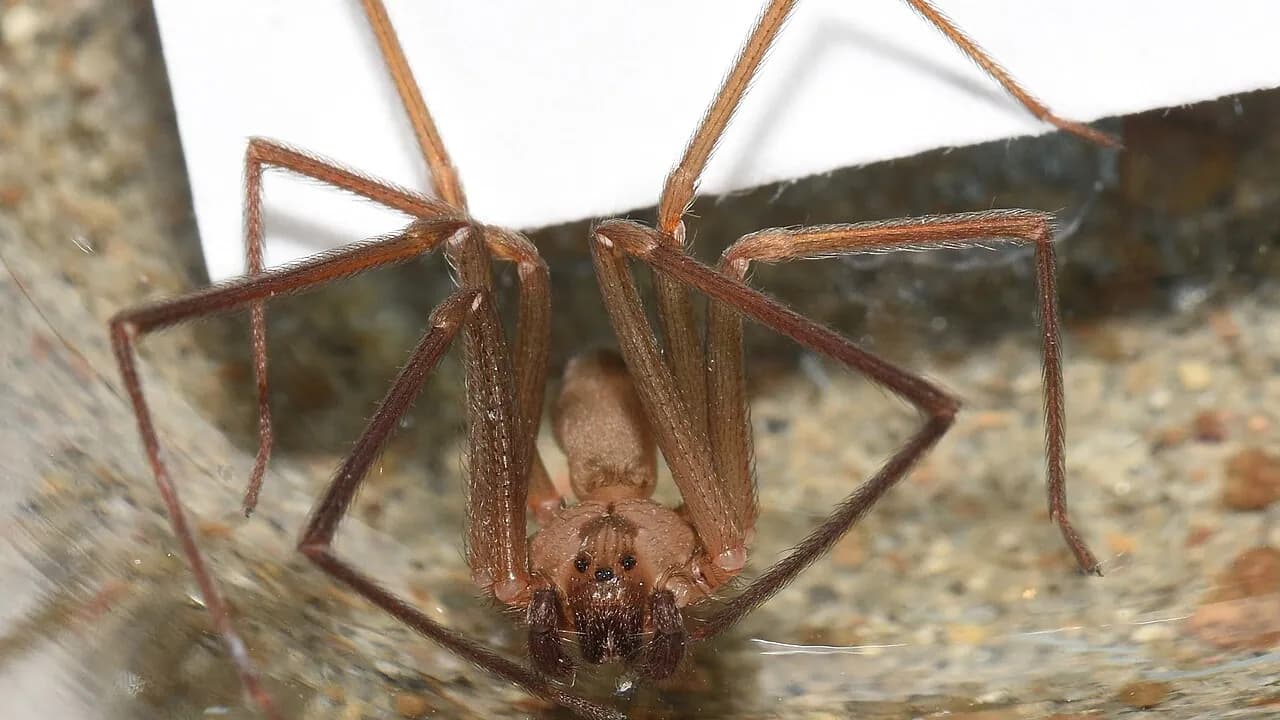
Because the number and arrangement of eyes is so consistent within groups, eye pattern is a key feature used by AI spider identifiers. The brown recluse, for instance, breaks the usual rule with just six eyes in three pairs — an instant tell.
Web types {#webs}
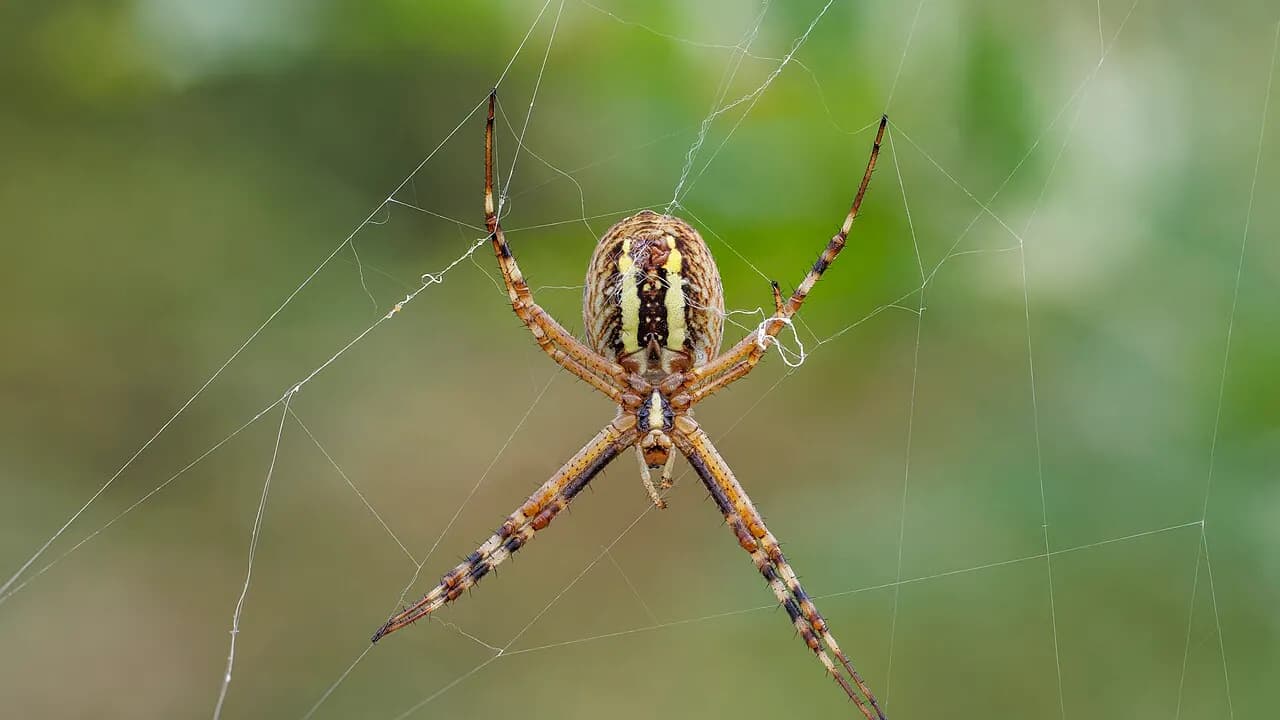
Not every spider builds a web, and the ones that do leave a signature you can read:
- Orb webs — the classic circular wheel of garden spiders
- Funnel webs — a tube-like retreat at ground level
- Sheet webs — flat, dense horizontal layers
- Cobwebs — irregular three-dimensional tangles, typical of widows
Web-building spiders trap prey passively and wait. Hunting spiders — wolves, jumpers and huntsmen — actively chase prey down and may build only a silk retreat. So the presence and style of a web instantly narrows the possibilities.
Putting it together for identification
Four features do most of the work:
- Leg dimensions — long and spindly, or short and robust?
- Eye pattern — two big eyes, or six in pairs?
- Web structure — orb, funnel, sheet, cobweb, or none?
- Body markings — an hourglass, a violin, a cross, banded legs?
Read those four signals and you have already done what an AI identifier does in its first moments — narrowing thousands of species down to a confident shortlist.
Found a spider like this?
Upload a photo and confirm the species in seconds — with a venom-risk indicator.
Identify a Spider FreeComments
No comments yet. Be the first to share your thoughts!